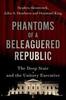
A powerful dissection of one of the fundamental problems in American governance today: the clash between presidents determined to redirect the nation through ever-tighter control of administration and an executive branch still organized to promote shared interests in steady hands, due deliberation...
Renowned scholar Stephen Skowronek’s insights have fundamentally altered our understanding of the American presidency. His “political time” thesis has been particularly influential, revealing how presidents reckon with the work of their predecessors, situate their power within recent...
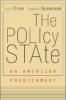
Policy is government’s ready response to changing times, the key to its successful adaptation. It tackles problems as they arise, from foreign relations and economic affairs to race relations and family affairs. Karen Orren and Stephen Skowronek take a closer look at this well-known reality of...
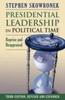
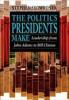
Stephen Skowronek’s wholly innovative study demonstrates that presidents are persistent agents of change, continually disrupting and transforming the political landscape. In an afterword to this new edition, the author examines “third way” leadership as it has been practiced by Bill Clinton...
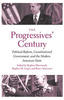
A landmark work on how the Progressive Era redefined the playing field for conservatives and liberals alike.
During the 1912 presidential campaign, Progressivism emerged as an alternative to what was then considered an outmoded system of government. A century later, a new generation of...
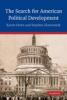
American political development (APD) has claimed in recent years the attention of a growing band of political scientists, and scholars have begun to speak of “APD” as a subfield within the discipline. This book provides a justification for studying politics historically, not only for what it...
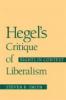
In Hegel’s Critique of Liberalism, Steven B. Smith examines Hegel’s critique of rights-based liberalism and its relevance to contemporary political concerns. Smith argues that Hegel reformulated classic liberalism, preserving what was of value while rendering it more attentive to the...
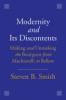
Steven B. Smith examines the concept of modernity, not as the end product of historical developments but as a state of mind. He explores modernism as a source of both pride and anxiety, suggesting that its most distinctive characteristics are the self-criticisms and doubts that accompany social and...
Who ought to govern? Why should I obey the law? How should conflict be controlled? What is the proper education for a citizen and a statesman? These questions probe some of the deepest and most enduring problems that every society confronts, regardless of time and place. Today we ask the same...
This publications is available on the following link(s):
http://www.amazon.com/dp/0801416728