
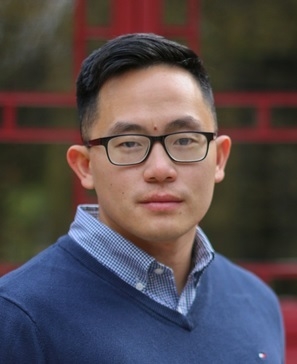
Victor Wu

Victor Wu's picture
Graduate School Student

Bio

Victor Wu is a PhD student in political science at Yale University. His book project, Democracy After the Executive Revolution, develops a new political theory of modern democracy organized around the concept of initiative

The project proceeds in two parts. Part I (Diagnosis) traces the birth, death, and resurrection of the legislative paradigm that has structured the political theory and institutional design of representative government since the late seventeenth century—a paradigm whose foundation, the legislation-execution distinction, was decisively undermined in practice by the rise of the democratic executive across the transatlantic world in the late nineteenth and early twentieth centuries (the “executive revolution”). This transformation was clearly recognized at the time but its significance was almost entirely forgotten or suppressed in postwar democratic theory. Part I recovers the neglected transatlantic tradition of institutional realism from Alexander Hamilton, Walter Bagehot, Woodrow Wilson, Max Weber, Clinton Rossiter, and E. E. Schattschneider as a path not taken: descriptively more accurate and normatively more attractive than the alternatives that dominated in the postwar periodThe overarching claim is that the logic of modern democratic politics is not legislative legislation versus executive execution but rather executive initiative versus legislative critique.

Part II (Reconstruction) then offers a new systematic political theory of modern democracy after the executive revolution. It defends a comprehensive framework of Responsible Competition—rule by public offices rather than private power; legible, general, and accountable electoral competition; and contestation between the co-equal but qualitatively distinct general representation claims of executives and plural representation claims of legislatures to represent the people—as the best institutional realization of traditional democratic and liberal ideals (collective agency, public accountability; individual freedom, moral equality) under contemporary conditions. The project articulates, generalizes, and applies the method of institutional realism in political theory, grounding normative theory and institutional design in the historical and empirical analysis of politics rather than ahistorical moral premises or inherited but obsolete conceptual frameworks.

Victor’s working papers stemming from this larger project include: (1) an analytic reconstruction of the original logic grounding the descriptive assumption of legislative predominance implicit in the Federalist Papers and the consequences of its historical collapse for contemporary originalist arguments in American constitutional theory (under review); (2) a new theory of the modern separation of powers as executive initiative versus legislative critique, developed through a revisionist interpretation of Woodrow Wilson as the most important early theorist of democracy after the executive revolution; and (3) an intervention in contemporary debates over sortition, arguing that innovations like citizens’ assemblies (ad hoc bodies selected by lottery) should be understood not as steps toward post-electoral democracy (“lottocracy”) but rather as valuable institutional sites of citizen initiative and public critique.

At Yale, he has served as one of the political science department’s elected graduate student representatives since spring 2025. He also serves as a member of the Graduate School of Arts and Sciences Committee on Regulations & Discipline. His exam fields are political theory, comparative politics, and formal theory. He is advised by Ian Shapiro (chair), Hélène Landemore, Bryan Garsten, and Stephen Skowronek.

Before starting at Yale, Victor received his AB in 2016 from Harvard College, worked as a research associate at Harvard Business School (2016-2017), served as an artillery officer in the United States Marine Corps (2018-2022), and received an MA in 2024 as a Yenching Scholar at Peking University (2022-2024).

Contact

Education

  • M.A. in China Studies, Peking University, 2024
  • A.B. in Social Studies and Philosophy (magna cum laude), Harvard University, 2016

Awards

Interviews

Areas of Interest

  • Political Theory
  • Comparative Politics
  • American Political Development
  • Philosophy of Social Science